A Time to Retreat from Trauma

How do you move away from something difficult, dangerous, or disagreeable?

Should we tell someone about our painful past? Are we still struggling with our childhood or adult-life experienced trauma but endangered to discussing our experiences? 

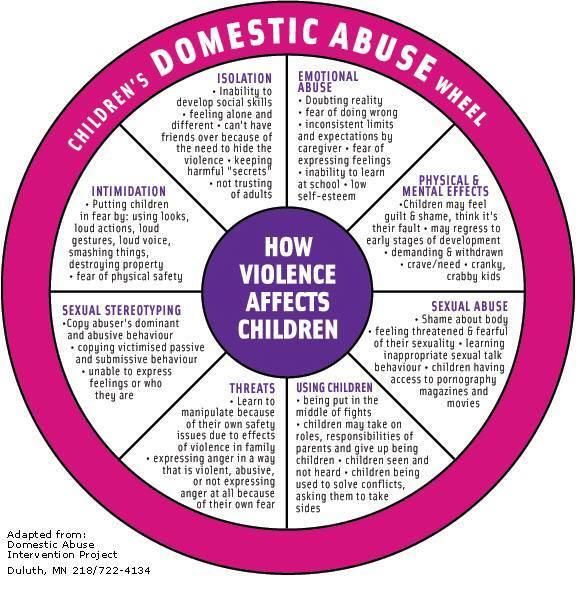
Our unhealed childhood trauma can manifest in various ways, hereby impacting both our mental and physical health, as well as social interactions. When un-resolved, it can lead to emotional and mental health challenges, difficulty forming relationships, behavioral issues and moving on in life. 

Adults who endured serious childhood trauma may assume their whole future must be determined by their past. It doesn’t have to be. Those who are able to choose a different path can beat the odds.

One rewarding part of my job as a therapist is persuading or encouraging people to go back memory lane… which is more like revealing ourselves to another person, but appropriately applying clinical tools like DBT and CBT-Informed Trauma for safe space purposes.

Believe me, this is not an easy task.
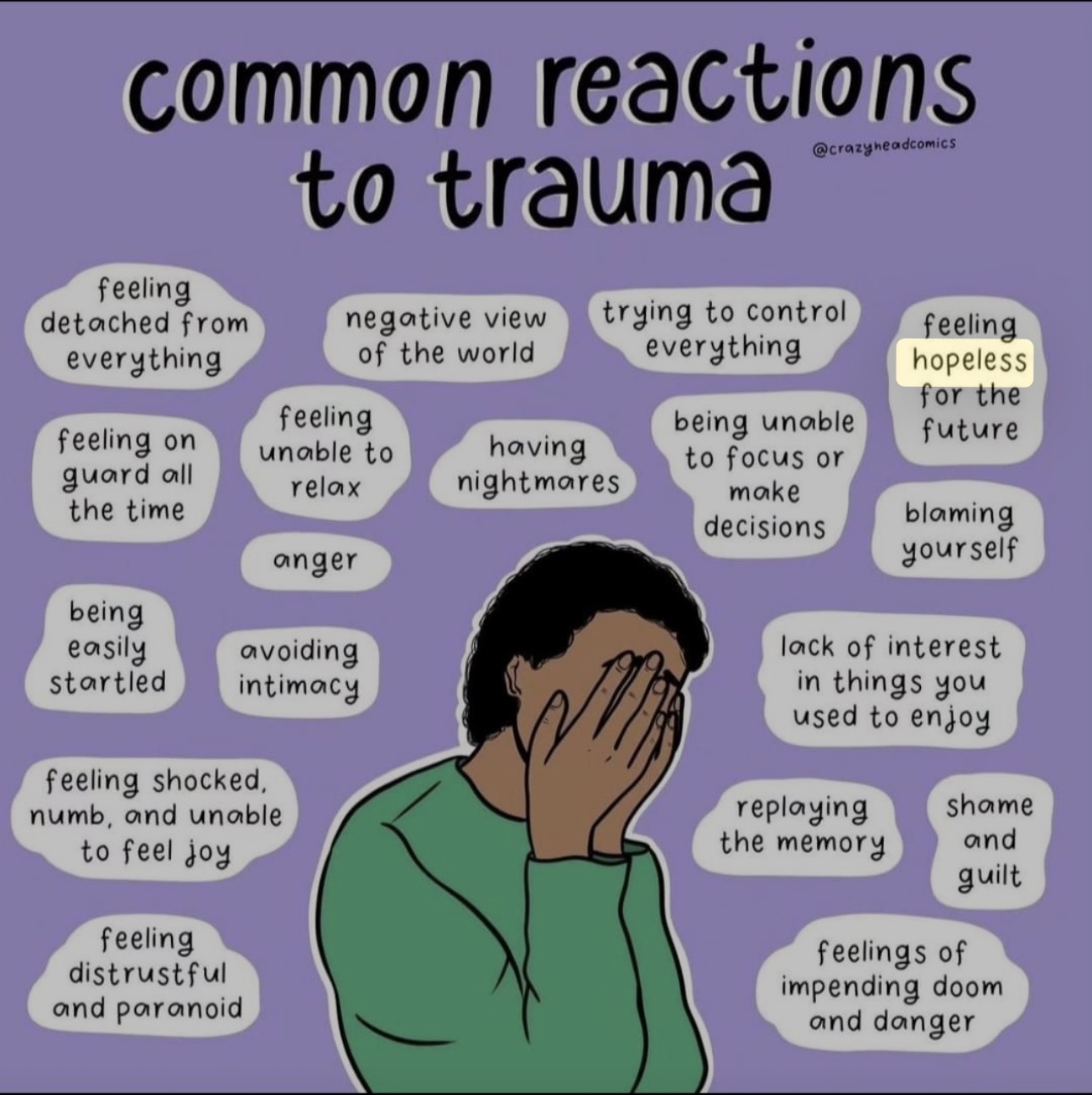
Many people I know have experienced at least one trauma event in their lifetime, with so many developing into PTSD (post-traumatic stress disorder) and still not comfortable talking about it. Even when we know that the power of self-disclosure will bring about change, growth, increase our comfort level when telling our stories, especially if we are still hurting whenever we think about it.

But while we were yet children, more than 20% of us will have at least one or two traumatic experiences. Some we have managed to resolve through divine or direct intervention, or probably still covering up our bruises from over the years until emotionally triggered or displaced. 

So, what is trauma? Trauma is an emotional response to a terrible event like physical, sexual, emotional abuse; or an accident, crime, natural disaster, neglect, experiencing or witnessing violence, death of a loved one, war, and more.

In my opinion, trauma is defined by the way a person reacts to events. An adverse traumatic experience to one person may not be dreadful to another. While some people can cope with the trauma and move forward quickly. Others, though, may not be able to cope.

I have experienced some and still healing … I also have listened to several of my support group members tell me theirs.. “Hey, Its Okay, This Is a Safe Space To Be You” I usually say with a warm assuring smile before every therapeutic session as they tell their stories.

It takes so much courage to talk openly about experiences that are humiliating and invalidating. Some trauma survivors hold deeply entrenched feelings of self-blame and other distorted and inaccurate thoughts about the role they believe they played in their abuse. Some display laughter which is a way to communicate that embarrassment, and also an avenue for distraction to short-circuit further exploration of their trauma experiences.

What We See: Immediately after such an adverse event, shock and denial becomes typical, long term reactions include unpredictable emotions, flashbacks, strained relationships, and even physical symptoms like headaches or nausea. While these feelings are normal, some people will have difficulty moving on with their lives and become burdened with their untold tales of trauma. Not everyone though.

But, why then do we still struggle to share our painful experiences? I know talking about our painful past comes with risks and rewards, and I know there is no single rule or principle that all people who have experienced trauma can follow and expect positive results when it comes to self-disclosure. But the good thing is that, probably knowing how to break the code of silence may be easier if we know how self-disclosure helps. 

After working with young children for years, I learned that some of their response to traumatic events usually appear in the form of anger or fear and can seem like a regular display of emotions that are sometimes not considered trauma, but disruptive behaviors in structured settings, especially at schools.

For the older generation, underneath all that exaggerated laughter, macho moves, makeup, fancy garment, social media packaging display… there is just so much more going on with a camouflage for suffering in silence. It is important to recognize these emotions and behaviors as possible trauma symptoms, without dismissing them as just being attention-seeking, fake-happy, sad or moody.

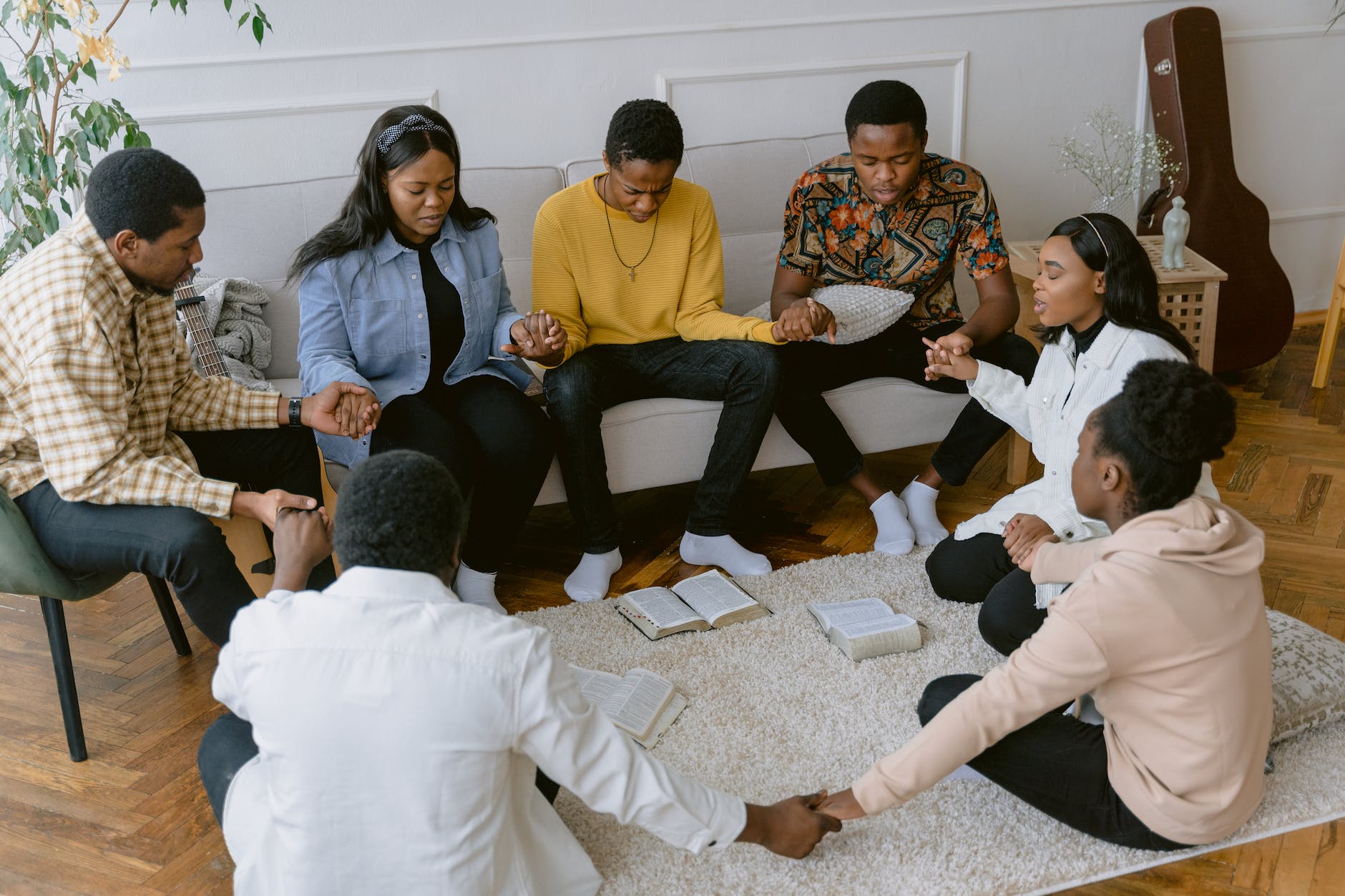
Photo by Antoni Shkraba on Pexels.com

My personal trauma story is linked around my MAY birthday season, it has become a conscious mental health check clock that takes me back memory lane to my never-to-be forgotten 19th birthday celebration event which resulted in an overwhelming lockdown in Ogoni Land. A terrifying school riot in Rivers State.

I still cringe with daunting memories as layered goosebumps decorate my skin whenever I remember the faces of distressed students running around the campus, seeking shelter and escape… gun shoots, screams, burning buildings and finally safety in the hands of total strangers who sheltered us in an unknown remote village to hide for days, until help came from Port Harcourt city civil right advocates.

I never realized I was haunted about the whole event until I finally sat down for social emotional disturbance talk-therapy 15 years later to address a different emotional distress, after being robbed at a bank in downtown Philadelphia, while working as a head teller.

Oh dear! that was a-whole-lot of unresolved narratives poured out… but yeah, I was glad the platform was available, it helped me move forward… #TalkTherapyWorks.

What’s the impact of trauma?

So, today if you are reading this… Let’s practice some mindfulness together….’soft breathing techniques… in with the new…. out with the old... while applying deep self-reflection towards our feelings and asking ourselves… ‘What quirky memories do I still carry with me? ‘Do I still tremble or easily triggered when I remember any dreadful event? ‘Am I still holding on to some bizarre memories of what …’He did to me’.. ‘She said to me’.. ‘They put me through’? Has there been any remarkable behavior that struck you about people who had never disclosed their history of trauma that you can identify with?

Was there any enormous feeling of guilt, shame and negative self-concepts that stayed the course of time in your mind? Would you agree that some painful emotions were as fresh today as when they first arose? Most of us have not learned to shift those traumatic memories to be simply bad memories; memories that have little power to stir up distress.

What We Hear: I noticed a lot of people exposed to several adverse childhood experiences saying, “I have never talked about this before. No one will believe me. No one has ever asked me.” But evidently, our trauma stories do not reside inside us anymore; because we decided to tell it… to release, forgive, inspire and teach.

Some poor conditions in the past and present can affect us, but not disturb us. Overtime, we have allowed our present beliefs to create our current disturbance. We often underplay and do not recognize how flawed our logic is about our trauma events.

To challenge our reasoning, I usually practice the following: “Imagine you’re talking to a 12-year-old who just experienced their father walk out of the family and disappear forever. Would you suggest that if the child had only kept their grades up, cleaned their room more often, and been a better person, bad things would not have happened to them?” hmmm…certainly our thinking does not sound very helpful when we put it to that test. What about that child 20 years after? How is the family doing emotionally, 10 years after?

One of the hardest parts of therapy (talking) is revealing ourselves to another person. It is also one of the most healing paths into self-discovery when done in a SAFE space. We are hurt in the context of relationships, and it is within another relationships that we find healing.

We can still be struggling with disconnecting from the past, shut down any advances to move forward, and in the process, find our healing path in another worthy relationship that is so good for us.

As C.S. Lewis once said, “You can’t go back and change the beginning, but you can start where you are and change the ending.”

When we feel shameful of how self-disclosure can expose our fear, weakness and vulnerability, but also leads to post-traumatic growth, improve relationships, and facilitate lasting change.

What to do: You Are Not Alone. Help Is Here. Once you are ready to talk about your painful past, possibly for the first time, here are some things to consider in a SAFE SPACE.

  1. Encourage and bring others into your lonely and confusing personal story can help end that isolation. (Licensed mental health counselors, Psychologists etc.)
  2. Talking can help you change the narrative surrounding the traumatic event.
  3. Direct your ‘When thoughts’ …when heard silently in our minds, they seem convincing. But when we say our thoughts to others, we can see the flaws and faulty reasoning more easily.
  4. Change the narrative surrounding the traumatic event by practicing rational emotive behavior therapy (REBT) which helps to assert that our beliefs about ourselves, others, and the world keep us stuck, not the events themselves.
  5. Talking with others with the same lived experience might be a place to start (this is not pity-party) Regardless of your next step, know that you are not defined by your past but by the direction you are heading.

Today, I find myself constantly using affirmation words like… Hey, It’s also within relationships that we find healingRight? It is okay to set boundaries and bury some” Or just assuring my support group that it is okay to SMILE or laugh when disclosing trauma of a diagnosis.

Our story telling laughter can mean many things to different people. It can signal shame, embarrassment or it can be a defense that protects the trauma survivor from feeling the depth of their actual pain. Have you identified yours?

Moving forward… as I celebrated another birthday last week, I’d decided not to take life too seriously anymore and begin practicing more self-reflection partnered with long adventure-vacation. Simply by having more fun on this journey called life, shuffling and intentionally selecting only what feeds my soul positively, without holding back but flushing out the past and all that came with it. You should try it too… Well, I am still standing, LOL…’ with two lessons learned for a new age (1) Self Reflection. (2) Rest. But more grateful to God.

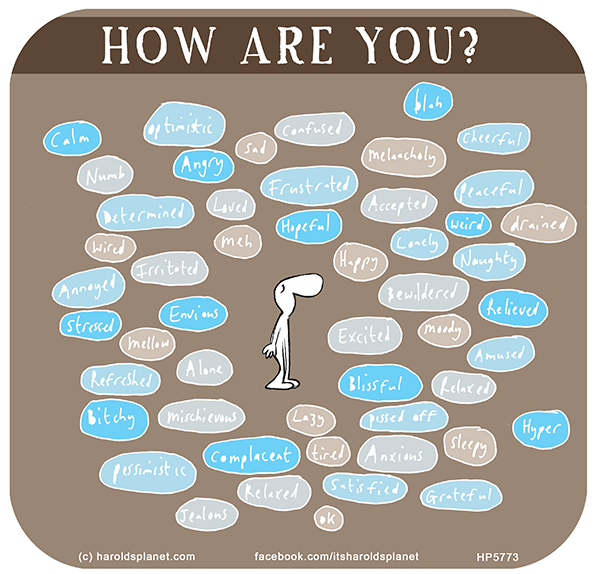
It is MAY, National Mental Health Awareness Month. ‘How are you developing mentally?

Yours in HOPE as I share…

Yinka.

Find Your Happy Place ❤️

Screenshot

Our happy place is not always related to our thoughts or a movement, neither is it fixated or based on the terms of endearment of a particular person or location. 

Rather, it is how we envision happiness from within us; how we manage our emotion, and how we desire to be filled. It can also be any physical or mental space, situation, or activity that makes you feel relaxed, calm, content, or joyful.

To discover our happy place, we might want to reconsider a new definition of what happiness really means to us at different seasons of our life. 

If you haven’t thought about it, or how to find your happy place, you should today!

Probably if you look up the meaning of happiness in the dictionary now, it will help in understanding two-simple things about seeking that inner happy place you never thought existed. 

It is either: ‘What you’re seeking in comfort’ or ‘What you do for comfort

My happy place is usually when I am having a full circle moment. (sense of dejavu)  

So, during my growing up days on the Island, my happy place I thought then was usually in the company of my dogs; Trixie, Julie and Jolly (those very vigilant and over-protective mixed-breed dogs who literally would listen to all my youthful lamentation without talking back, but also obediently followed me around possessively keeping everyone away; to think of it now, anyone who grew up on the Island in the ‘70s and 80s knew about the vicious dogs on Oil Mill Street then. 

Photo by Nancy Guth on Pexels.com

I remember bumping into an old-neighbor I hadn’t seen in over 40 years while visiting Chicago, she remembered me clearly just by connecting her vivid memories to those dogs, “Aha, I remember You and those crazy dogs of yours, no one ever dared to come near your house because of them” she’d exclaimed in high pitch voice, but in pure joy.

The other happy place discovered in my teenage phase was hiding inside my late Dad’s home-office, which was attached to our house. It was my refuge of hope in times of despair.

There was always a sense of calmness, acceptance, safety and comfort there. Even as so little was said between us, we were usually very comfortable just basking in awe and existence of each other’s company, but individually drifted off to our two-separate worlds.

He’s busy drawing on maps and calculating numbers for surveyed land measured, while I am allowed to curl up in a corner, subconsciously allowing the sound from the noisy wall-mounted air conditioner to block out any distractive sounds from outside, as I travel faraway on a whimsical make-believe world of alluring romantic tales or fist clenching revolutionary stories, all buried deep inside books bigger than my head (hidden in between the textbooks.. were Pacesetters, Mills & Boon or a Leon Uris book). Am sure someone reading this can relate. Lol.

That was 35 years ago…

Photo by Genaro Servu00edn on Pexels.com

Today, as I celebrate my 52nd birthday, I have learned that mentally, my happy place has evolved over the years, I have learned that for anyone to experience a happy-place-moment, the body must be able to release at least one of the four ‘happy chemicals’ to feel happy; 1. dopamine, 2. endorphins, 3. serotonin, and 4. oxytocin, so technically, we all still need these hormones that are responsible for how we experience our happy place no matter our age or what life throws at us.

Also, life has also taught me that; to approach my happy place, I must intentionally replace any negative thoughts of “Why is this happening to me’ with “What is this trying to teach me” as a game changer to move forward.

Apparently, that’s where feelings of pleasure, joy, serenity, contentment, gratitude, overall life satisfaction, and fulfillment reside. Phew! it is indeed a process. But it is worth the journey; knowing your happy place is important to living a fruitful and fulfilling life.

What about you? what, who and where is your happy place?

Photo by Ena Marinkovic on Pexels.com

Everyone has their own unique happy place. You can go to your happy place when the world feels a bit too chaotic. It is a central point where you can rest, recharge, and return stronger. It can also be a place to reflect before reacting, where you get to study the fine line for constructive expression and suppressing them to conform to societal norms.

To help you find your happy place intentionally, all you need is patience and practice to get there. Happiness is infectious, finding your happy place will also benefit everyone attached to you, and your surrounding community.

When we eventually decide to exit our happy place, our true emotional wisdom will involve honoring our feelings as they are, allowing us to deepen our empathy, creativity, genuine connections and become emotionally bold. To help ‘keep’ that happy place, probably it is time you let go of somethings crowding the space meant for your happiness. Learn to choose only people who are good for your mental health.

Letting go is hard. We feel bad when we lose something. It’s like when you have to pack and unpack your house and go through years of accumulated possessions, you would have experienced the dilemma of whether to keep something or to let it go. 

Photo by Anna Shvets on Pexels.com

More often than not, and especially if you are one who is sentimental, you might tend to hold on! This may explain why our shelves are filled with books we never read, or our cupboards are full of trinkets and ornaments gathering dust! 

Isn’t it remarkable how quickly our lives can improve, how our happy places can be discovered when we remove toxic people, places and patterns from our lives? Yeah, because sometimes the desires we have are part of God’s guidance in our lives. Just as Frederick Buechner said ‘Vocation is the place where our deep gladness meets the world’s deep need.’  

Go on, am cheering you on! Find and nurture your happy-place!

Yours in Hope, as I share my happy-place song with you.

Yinka.

Healing From Things We Do Not Talk About

We learn so much about life based on what was modeled to us from a very tender age. Some of us, even in our adult lives will still be provoked or triggered by certain events from the past because we are probably still struggling with navigating unstable emotions; what we think and believe about ourselves, about love; disappointments, loss, grief or whenever those big resonating feelings start to build up. 

Meet Amira, my very witty Gen-Z 16 year-old-client with social emotional disturbances. She loves Drake the rapper and singer from Canada. I barely know him, but I do know about Drake from state farm, I’d told her once and received a very dry sober look but with a hidden smile.

I loved that. It means she acknowledges my outrageous sense of humor and presence.

But to better understand and utilize an appropriate clinical treatment for her, and a sustainable person-centered-planning, I had to go learn more about her obsession with Drake’s song; titled ‘Yebba’s Heartbreak. While it took me days to dilate the triggering mention of ‘I do’ from the song, I was able to be empathetic by encouraging open-ended conversation, position myself subconsciously within the lyrics now parading my brain, feel her hurt from the trauma surrounding the message in Drake’s song and to better grasp the reason behind Yebba’s outspoken advocacy for mental health awareness and support.

Emotionally, after 2 weeks of playing the lyrics over in my head, I got younger at heart, gained a new young friend as we became closer with a dash of confidence.

And then the talk started…

Today, if you are reading this, I am asking…

How many of us have tucked in some very critical issues that’s still bitting deep down and affecting our healing process? Were we ever cautioned as children to keep-that-hurtful issue to yourself! arm ourselves with boundaries! or never encouraged to practice the three emotional escape steps (“I Notice, I Feel, I Can”). Or probably, we were reprimanded for even nurturing tender feelings of affection at a very young age? or instructed that embracing how you feel, talking about it and opening up means you are weak and vulnerable? Hmmm.

We cannot keep thinking of vulnerability as a weak and defenseless expression, while assuming that surrendering or submission of how we feel is like waving a white flag for peace in battle. Then whenever these big feelings start to creep-up our nerves, are we still believing that emotional vulnerability can sometimes be the only way we can discharge ourselves from boundaries that come from our default patterns of thinking that we develop from childhood?

In a sudden moment, betrayal can make you go from feeling safe, loved, and known, to feeling vulnerable, unwanted, and alone. And we are told certain burdens are meant to be shushed?

But what creates those early default thought process anyway?

Well, to put it simply, our past experiences. The events that we’ve lived through, the responses and behaviors we’ve seen modeled, and repeated exposure to circumstances all play a primary role in how we think in the present. For most of us, the biggest factor in our default thought process is our family of origin; the way we grew up, the family we grew up in, and the way they interacted with us. 

Help is here!
 
According to; Dr. Tiwalola Osunfisan, a Double-Board Practicing American Licensed Psychiatrist, Dr. Yemi Akinyemi; Professor of Psychiatry at Wayne State University & Dr. Kene Monplaisir of Acuitii. Dr. Nike Shoyinka, Miss USA Ambassador Angelena Taylor and Mental health advocate, Tinuke Odunlami, who all featured in my recently completed ‘Hey Sis, How Are You Developing Mentally Event in Michigan on 12/29/2023, leaving behind very important key points addressing Women’s mental health and giving suggestions on how to embrace speaking up and receiving treatment:

-Adversity is common to humanity. Do not compare, rather, focus on your process and growth. 
– Be authentic! You can only maintain the best version of you and not someone else’s.
– Objectively evaluate all shades of you for optimal holistic wellness 
– Choose improvement and progress over perfection. No one is perfect! 
– Be God-centered and keep your purpose in mind. Let God guide you in all decisions.
– Have an attitude of gratitude.  Gratitude for what you have, improves your mood and reduces anxiety.
– You cannot give what you do not have. So, intentionally fill your cup by taking good care of yourself.
– Self-care is not selfish rather, self-care involves any healthy activity that is intended to provide nurture to you in order to be more productive with your purpose and service to those around you.
– You are strong when you recognize when and how to seek help. 
– Find your trusted tribe, mentor, coach and professional support. You are not meant to do this life alone. 
– Speak up! Seek up! Support another! Spread the awareness!
By Dr. Tiwalola  Osunfisan (Practicing American Double Board Licensed Psychiatrist):
 

Let Us Be Made New

So, our boldness in being expressive and seeking HELP doesn’t need to be grand and broadcast for all to see; it may not be as loud or even annoying as you might have thought; it’s certainly not measured by a lack of fear, but in actions in spite of that fear; and most of all, boldness is simply the act of bringing whatever you have to God and trusting Him with the outcome.

Can we begin to spend some time today recognizing our default ways of thinking and replacing them with truth? And then, remember, this isn’t a once-and-done process. It took years to develop our current mental playlist of thoughts, so let’s expect that it will also take some time and energy to create a new mental playlist. 

But little by little, one thought at a time, this our new way of thinking (speaking up) will soon become the norm. Eventually, we will learn to be more expressive and fearless; never backing down from doing what is right; Be more vulnerable by allowing ourselves to get close enough to our truth; Be more compassionate by entering into our pain and owning our thoughts before they own us.

Yours in HOPE,
Yinka.

Michigan Endorsed Infant-Maternal Mental Health Specialist/Child and Family Licensed Psychologist.

Encouraging self-written love letters while waiting to be a Mother

One of the most encouraging yet doubtful words anyone can tell a woman who loves children and is yet to be a mother, or having difficulty with keeping her pregnancy to full term due to whatever medical reason. . . is “Oh, God has placed you as their mother on purpose.”


Photo by Ketut Subiyanto on Pexels.com

Hmmm . . . well said with good intention, but undesirable for a heavy heart that’s bleeding.

I totally understand this might be a difficult truth to handle for some women, especially when a woman is childless not by choice. Mother’s Day can be a painful reminder of profound loss. For some it is miscarriage, for others it is infertility, and then there is also an affect called circumstances beyond their control.

Today, I am hoping we can encourage every woman still waiting to be a mother, to be called momma or be celebrated every Mother’s Day through self-written love letters that soothes, while also bolstering the joy of motherhood with them. 

Yeah, every single one of them.

Photo by Kelly on Pexels.com

So, in the early Spring of 1999, we had just moved into a new apartment, two blocks away from Community College of Philadelphia, Spring Garden area. It was the perfect spot with the best view of The Art Museum. My job as the head teller at the community bank was fulfilling and just down the road, precisely Logan square in the bubbling heart of Center City Philly, which made my bike commute to work so easy and smooth. 

Life was simple and beautiful indeed.

One day, we had a guest who came in from New York to sit for her medical board exam, she was an old classmate from secondary school (FGGC Sagamu), a very intelligent lady. She was the first guest we entertained in our new IKEA ed-up digs! Just two minutes into our catching up on girly gists about our old party days in Lagos, my husband joined us in the kitchen as our guest abruptly exclaimed… ‘You are Pregnant Yinka’ 

Oh okay… Just like that? how? I didn’t even know I was? She continued to talk fast, as she checked my eyes, my pulse, my tongue and we all burst into one of the best heartfelt laughter. My childhood medical doctor friend, myself and my husband were elated at the good news-diagnosis inside my kitchen.

Fast forward to May of the same year, I lost that pregnancy. Drowned in a pool of my own blood, confused, I ignorantly and unconsciously drove myself to UPenn ER, clutching my tummy and expecting a miracle right there, while breaking all the traffic light codes like a crazy woman detached from reality, then called my husband to join me as he was also working in the same hospital. 

It was one of the most horrific Mother’s Day and birthday season of my life. In my grief I wrote a love letter to myself as an outlet for compassion, addressing my womb’s dilemma while also sending it on an errand to get it right the next time, and never play games with me again… today I’m overpowered with emotion, after recovering that same love letter written in pain over twenty years ago…even as I am still wrestling with the fact that the grief I experienced is still a daily challenge for other women today…

Photo by RDNE Stock project on Pexels.com

How many women have we reached out to today, who are still struggling with the acclaimed banner of today’s celebration? those struggling with the tabloid that brings yearly memories of hurt and detachment? those with dreams pampered but now a lost opportunity to be called momma or be celebrated for 5-mins? 

May be its time we begin to teach our little girls that not only does their womb serve as the human habitat, but also: (1) The greatest power a woman possesses, (2) Their ability to establish, create or conceive on all levels (3) That there is an aspect of womanhood they need to know that is not represented by our past indigenous culture (4) Which was the absence of a platform that’s geared towards preparing our little girls’ mindset about timing (5) That this same powerful and beautiful aspect of creation can also be tapped in the birth of projects, careers, personal healing, spirituality, and relationships.

And in relationships… 

Maybe it is time we begin to: (1) Openly address one of the most common causes of strained relationships or marriages as infertility or subfertility. (2) That there is usually a cause for concern if a woman finds it difficult to conceive after two years of marriage. (3) Most people do not wait that long before seeking for help. (4) The longer it goes on the greater the pressure from both families who are desperate to see grandchildren. (5) It could be quite distressing.

Photo by Antoni Shkraba on Pexels.com


We know that the problem could either come from the woman or the man. There are many reasons why this can occur. It could be genetic or due to medical problems affecting either or both of them. It could probably be due to a spiritual affliction emanating from several sources.

Those self-love written letters to myself over twenty-years ago have helped me heal and be able to effortlessly advocate for maternal mental health, connect with other women in waiting or women in maternal distress and women detached from the reality of handling the fear of conceiving and losing it again.

Those love letters were written again after encountering two more miscarriages and have proven beneficial in my journey towards giving hope to others by encouraging self-written love letters, and also writing to others, especially during any season of grief.

Can you imagine finding joy and hope in reading someone’s unexpected handwritten words to you? maybe we should consider how we can add this ancient form of communication back into our daily lives, while helping others too.

Photo by Tima Miroshnichenko on Pexels.com

But guess what! starting today, we can begin drafting those self-love letters, while we are also assured nothing happens by accident on God’s watch, especially in a way only He can accomplish. We are bound to experience both free will and His grace together in this life. Even before it is fully matured, our faith will help us follow His lead as we raise every un-born or adopted child in His light. 

May the joy of motherhood be experienced, may miracle shine a beautiful light on this truth, because the passage of time does not prevent the promise of God from coming to pass. God gives children to the barren. Psalm 113:9, “He maketh the barren woman to keep house, and to be a joyful mother of children.

Yours in Hope as I share BLESSED by KiDi ft. Mavado

Yinka – Licensed Child and Family Psychologist, Michigan Endorsed Infant/Maternal Mental Health

Understanding a child’s temperament: Autism Awareness

Photo by Ketut Subiyanto on Pexels.com

It is April, World Autism Awareness Month.

Let me begin by applauding all the great parents out there still committed and dedicated to helping with easing the acceptance of a given diagnosis, while following through with the prescribed-treatment plan for every child living with autism. I celebrate you! You did well! You are doing great!

Today, please take a 5-minute break, to look back at where you all started from, put on a happy expression, beam with gratitude or a smirk of “Just WOW” that displays your boldness, inspiring enough to tell stories of initial personal struggles, but later turned into a million little miracles of developmental victories, as you continue to surge forward in hope, for the future of your children. Remember, you are never alone.

Here I am speaking to you as a mother who has also experienced a child’s diagnosis+treatment on the home front, while my super hero cape is on and active as a licensed clinician of 20 years on the field, trust me when I say… ‘I DO understand what it is to journey through that road called… “Perhaps”

Photo by Polina Kovaleva on Pexels.com

Every child is born with his or her own individual way of approaching the world. I personally believe ‘Temperament’ stands out most as one of the unique qualities. Some will argue that, providing healthy and consistent validation on the part of the parents can help to instill a sense of worth and value in their child’s temperament as being seen and heard. While others believe that it is only critical to elevate the child’s emotional development through positive socialization, and development of a self-identity.

Hmm. To validate those emotions or not-to validate?

It is either a child’s temperament is easy-going, slow-to-warm, and active based on their environment.

Because childhood invalidation is thought to be related to many mental health issues in adulthood including an increased risk for both borderline personality disorder and narcissistic personality disorder. While invalidation may or may not include overt verbal abuse, its effects are typically longstanding and often carried with that child into their adult relationships.

Photo by Keira Burton on Pexels.com

There is No Right or Wrong Temperament.

It’s very important for children to be accepted for who they are. It is true, though, that some temperaments are easier to handle than others. A parent with an intense, reactive child or a child who is very shy and slow-to-warm-up will tell you that parenting these kids can be a challenge at times.  But, how can we learn when to tune in or acknowledge the child’s mood, while anticipating how they will react in certain situations without a display of their unique characteristic attitude or mood? hear this…

Temperament is not something your child chooses, neither is it something that you created. A child’s temperament shapes the way he/she experiences the world. A child who is cautious and needs time to feel comfortable in new situations and a child who jumps right in are likely to have very different experiences going to a crowded classmate’s birthday party. While the child who can handle a lot of sensory stimulation will experience a trip to the grocery store differently from a child who has a low threshold for a lot of surrounding noise and action. Same attitude, different reaction. 

And how do we respond (rather than react) to unexpected display of affection or outburst? aka: social tantrums or reported showdown by non-family members? Do we validate affectionately or otherwise?  hear this…

Maybe it is time we consider some characteristics that can describe a child’s temperament:

  • Emotional intensity – unstable moods, impulsive behavior and relationships
  • Activity level – the rate a child uses movement and physical skills to learn and explore
  • Frustration tolerance – dealing with setbacks (frustration or everyday inconveniences)
  • Reaction to new people – is this mutism or social phobia?
  • Reaction to change – some degree of discomfort without transitional plan

Child validation is the act of understanding and recognizing a child’s needs, feelings, thoughts, emotions, and non-verbal behavior as valid. It’s based on being able to empathize with a child’s trigger point and relate to their sensory-based reality or traumatic lived experiences.

On the other hand, invalidation is ignoring the child’s non-verbal attributes or when a child is made to believe that their needs, feelings, or lived emotional experiences does not matter. In other words, if conditioned in their childhood to believe that how they perceive their world is unreasonable or insignificant, these same messages can later generalize to feelings of insecurity, deep depression, issues in trusting themselves or others, and an unstable sense of self-identity.

Aha! here is my remedy: Be Your Child’s Champion! learn to follow their lead.

Have you ever found yourself feeling isolated from or being misunderstood, possibly even put down either by family, friends, and neighbors who disapprove of or judge your child? It can be empowering to see these situations as opportunities to educate others about your child. Step up!

For example, Abel is your son on the spectrum: you can explain to his aunt who is not getting the warm reaction expected from your child, “Abel, like a lot of other kids, needs time to adjust to new people or new environment.” You then hand her Abel’s preferred toy or favorite book, helping her learn to approach Abel slowly or change her diction to sensitively say …“It’s okay, I will just sit down next to you and wait while you are ready” “I see how you worked so hard building those blocks, maybe we can re-build together while you show/teach me” “Here, take my hands or show me how to help you”

Photo by Oleksandr Pidvalnyi on Pexels.com

So, understanding your child’s temperament helps you be a better parent. Recognizing patterns in your child’s behavior that are easily triggered by temperament can help you anticipate your child’s responses to certain situations. If you know that your child has a hard time making transitions, you can learn to work on visual schedule planning or gentle prompt-reminder system to ease the process of change. 

Sharing and observing your child’s strengths helps others see your child’s behavior from a different perspective, especially when derogatory names like ‘feisty nature’ are thrown carelessly around your child, take a deep breath, smile and allow the motherly instinct inside of you swell with pride and say “Hmm, Bella knows who she is and what she wants. She is loving and she is fierce. She puts her whole heart into everything.” Done.

Ordinarilly you might not be able to always control your child’s temperament, but you sure can navigate the triggers others bring around your child. Remember, the goal is not to change your child, but to help with adapting coping strategies and encouraging positive strength building.

While the month of April is dedicated to autism awareness, for me, everyday I am passionately connected to providing coping strategies+treatment for kids, providing individual personalized parent training, advocating for the importance of early detection in infant/toddlers and sharing resources with families in taking positive action… 

Conclusively, I implore all parents and caretakers to make the necessary sacrifices in understanding that autism is not solely a psychological/psychiatric disorder… … relatively it is physiological (neurological and biochemical) – meaning that there are things you can do to improve your child’s health, learning, and behavior.

A little bit of everything works! some nutritional changes, Joint-family social emotional support, traditional therapies like Sensory play therapy, ABA, speech, occupational therapy, etc.  but more important, the priceless “Cheerleader Cape’ you wear with them, and for them as they… continue to thrive.

For more information or free resources on: Infant & Maternal Mental Health/Early Childhood Education & Intervention/Autism Spectrum Diagnosis and treatment planning/Social Emotional Disorder/Advocacy for IEP with school-age children and more, visit us on our non-profit website: http://www.developmentalcarenetwork.org

Yours in HOPE as I share Mr. C Dollarz – Autistic

Yinka.

IMH-E, Licensed Infant/Maternal Mental Health Psychologist.

A reflective 25th Wedding Anniversary while addressing the pain of intergenerational trauma in the family

Last weekend marked my 25th wedding anniversary, which was celebrated in a very unique way. Having encountered series of eye opening revelation about life’s tricky games, this was indeed a perfect time to intimately engage the kids, dive into their minds and teach them how to use wisdom as the ability to learn from change.

As expected, my deep conversation about life, hope and gratitude instantly gave me the icky look from my three very outspoken generation-Z kids, which made it clear that it was indeed going to be an interesting but mediative evening of talk therapy onboard our dinner boat cruise. 

As we waited patiently for our seafood combination to be served, I was pleasantly diverted by the beautiful catchy vibes of the sound track ‘We don’t talk about Bruno’ from the movie Encanto playing in the background.

Ah, I bet the kids were relieved and saved by the bell, because they quickly changed the topic once they heard the tunes, and obviously glad to hear the song finally take over mom’s boring talk, (probably also pleased I will finally shut up and stop making this fun evening anything more like my psychology therapeutic clinic).

Thereafter, I began to notice pure display of bliss and bewilderment fill up their faces, bodies moving to the rhythm as their individual point-of-view and opinion surrounding the very controversial movie Encanto began.

Still, my husband and I made it clear to them that the real lesson behind the movie was significantly addressing the pain of Intergenerational trauma in the family, revealing mental health challenges and acknowledging that, spiritually it can be deeper than they can ever imagine.

Here we go… ‘sail with us as I take you into the storyline of ENCANTO. . .

Encanto is an American animated musical fantasy comedy film produced by Walt Disney Animation Studios. It was released on November 24, 2021  in the United States, took place in the mountains of Colombia and focuses on the Madrigals, a multigenerational family whose members were each granted magical gifts, with the exception of one, Mirabel.

In Encanto, Mirabel’s insistence on seeking out Bruno and talking about the cracks in the family eventually cause the rest of the Madrigals to examine their own issues. This enables them to deal with the impact of intergenerational trauma and move forward as a happier, more accepting, and more functional family system.

Encanto features original songs written by Lin-Manuel Miranda, whose soundtrack received widespread acclaim and topped the US Billboard 200 in 2022. A massive critical success (earning the Golden Globe for Best Animated Feature among other accolades), the film went on to become the highest-grossing animated feature of 2021.

So, there is really a lot to reflect on, learn from and love about Encanto, starting from its gorgeous animation, appealing characters, and engaging musical story (best part for my kids) but then, the theme also exposes something many of us today will find profoundly relatable and disturbing, which is:

Not talking about the Origin and Pain of Intergenerational Trauma within the family!

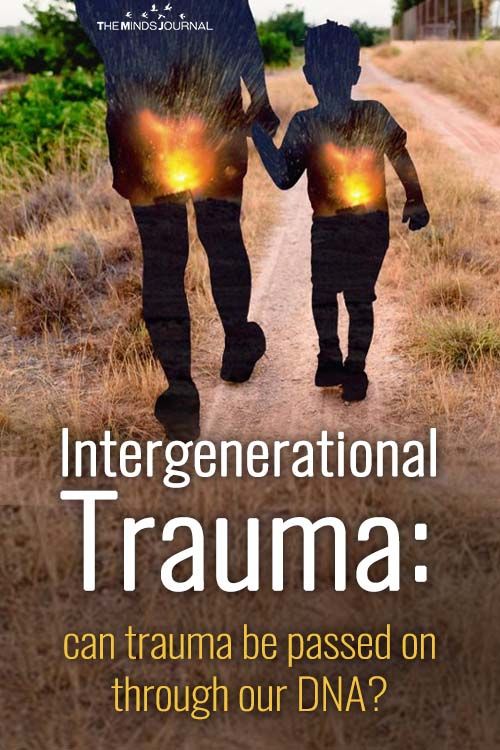
What is Intergenerational trauma?

This is when the effects of trauma are passed down from one generation to the next. It is also referred to as transgenerational trauma or multigenerational trauma.

Every family today must have encountered or still in denial of the pain of unspoken intergenerational trauma in their family as related to the movie, or coping with the aftermath of the deeds.

When the pain and confusion of intergenerational post traumatic events are not properly taken care of, it continues to harbor and disorient the mental well-being of the naïve generation in waiting.

When human consciences are so deeply rooted in secrets so scandalous and dangerous, it births new grounds for regrets, envy and hatred towards each other, within the same family.

Will anyone be bold enough to crush or cancel those generational carry-over curses and burdens that have been circulating within the family? Are we still nursing and sweeping those hideous and detrimental dirt from those before us, under the rug? To keep face, fame or family name?

For how long will we fold our hands and watch in reckless abandonment as our own seeds gasp in bewilderment of how crazy things were then, or laugh at our ignorance because they have chosen to be brave, and chosen the path that prevails towards the light, or even (God forbid) fall through the cracks… all because the pain of intergenerational trauma was never addressed in their family?

Are you following me?

When something happens to one person in the family system it can affect the whole system when not resolved. It can also reveal family patterns of behavior and repeated dynamics across generations that help contextualize how one set has impacted the next. Positively or negatively.

And because it is almost forbidden, it is usually never discussed. It gets hushed as the trauma from unspoken turbulence gets carried on with heavy hearts full of biases, hatred and anger.

We should talk about it to get help, closure or at least deal with it now, so the generation we are raising and thereafter are not burdened by the errs or sins of any past or burdened with…

(1) Self-blame & Depression (2) Denial & Loneliness (3) Attacking Others and seeking attention/affection (4) Withdrawal in their own time and then life-long feeling of insecurity.

Just like in the movie Encanto and our daily lives, some are still dealing with very controversial, diabolic or difficult family members far or near, without really understanding the genesis of the turbulence. 

Are we courageous enough like Mirabel in the movie, who insisted on seeking out Bruno and talking about the cracks in the family, which eventually causes the rest of the Madrigals (especially The Matriarch) to examine their own consciences, issues, deal with the impact of intergenerational trauma and move forward as a happier, more accepting, and more functional family system?

Or are you like Abuela (their grandmother) who focuses on the past hurt and miracle that kept her and the triplets alive, who believes that a certain ‘magic’ arose from experiencing deep pain, a pain so deep that it’s impacted each member of the Madrigal clan, even if they don’t know exactly how or why?

Move closer and hear me out…

Accepting deep sorrowful carry over indeed is trauma. And no matter how sweet or tender that person is or was, allowing the rest of the family to carry on their pain is toxic, dangerous and unacceptable.

Are we comfortable in our truth? Or still in denial of what could have been?

Today, in marriages or relationships, we see this same trauma still lurking in the background making our own multigenerational story the perfect lens through which understanding and exploring leftovers or carry overs of intergenerational trauma seem acceptable.

What is it? how can people cope with it?  Why is it important to seek help, step out of that circular-curse in order to move forward into greatness?

If you are reading this today, and have ever wondered, ‘why the cracks in my life or my family? Why the cracks in my relationships? can I relate to the apparent unexplained challenges I see in my family-line? Can I be excused of partaking in the trauma-party witnessed in my family? Indeed, are there still many rivers that flow into the reservoir of trauma that I need to be aware of?

Even if an individual isn’t aware of the roots of the intergenerational trauma they’re experiencing, bringing about change can happen by reframing and refocusing events and responses that an individual can control.

So, as I celebrate my 25th year of this edifying institution called marriage with my ‘ForeverDude, I pray for more Godly insight to be courageous in dissecting and discussing filling-up strategies for any situation that comes our way… praying for divine intervention regarding other relationships out there that require super connection and amendment from God. Praying that the generation after us will look back with sound minds while maintaining a Godly foundation, a coherent narrative that encompasses the whole functional family system, at least as much as possible. 

And YES! it is okay to talk about Bruno 🙂

Yours in HOPE & HEALING as I share a video clip from Encanto’s ‘We don’t talk about Bruno’

YinkaTLLP Licensed Child and Family Psychologist, Michigan Endorsed Infant Mental Health Therapist, Certified ABA Specialist & Certified Early Childhood Educator/Policy Advocate.

The Fragrance of Memories: Yinka@50

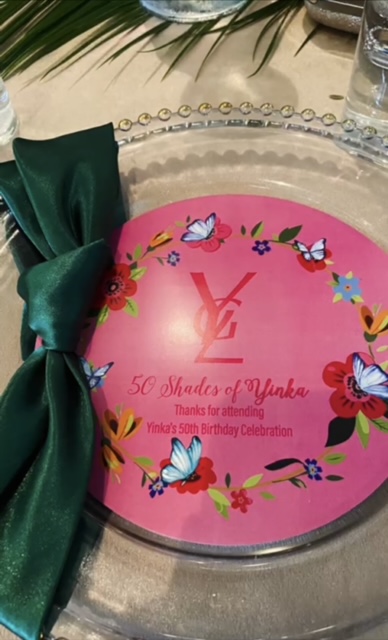
From the rising sun on a wet Wednesday morning of May 10 in the year 1972, a baby girl was delivered into the Gansallo family house, at the famous Island Maternity Hospital on Lagos Island. Indeed, a wide-eyed cry announced my landing which foretold a bewildering future. 

The astonishing resemblance of my late paternal Great-Grandmother, Lady Sophia Mori-Lewa DaSilva was so noticeable, I was instantly nicknamed “Atupa Parlor” after her (meaning the bright lantern that brightens a room) or sometimes “Emi Mama l’oke” (grandma’s breath) usually indicating the strong enduring personality of her industrious nature and philanthropy.

Today as I turn 50, I am beyond words on how many descriptive adjectives I have left in me from Professor Alo’s semantics class at Uniport, which is so unlike me. But deep inside, I can feel this colossal triumphant jubilation going on, it’s like there’s a non-stop praise gig happening! And am being invited to celebrate.

So, sometimes in life we get the chance to start again, we breathe deep to stand tall. We are offered a choice to either deal with the hiccups life throws at us, live with it or leave it behind.

We prepare to make our way without knowing whether the future will wait for us to catch up on missed opportunities… or we just brave it, with our faith, with love by relying on our reflective light. 

For me, this is the morning that I’ve dreamed of. The anniversary of all the enchanting and whimsical events I have encountered! Jubilee of unbelievable but jaw dropping testimonies! Reminiscing on all the principled life skills and platform for spirituality my Mother has instilled in me, the importance of education and values of setting goals mentoring from the most astute man I know, my late father.

My Gratitude Runs Deep.

And my journey begins, with steps so few, that a child could count them. 

A new dawn… forged by the force of life itself.

And if I have spent a lot of my life trying to understand why and how absurd things happen, trying to have boundaries, and then trying to enforce them. Well, I’m finally understanding that I don’t need to be loud or demanding to have healthy boundaries. I don’t need to determine how other people behave around me. I just need to pre-decide how I will react when other people behave otherwise.

Setting healthy boundaries means being clear about asserting one’s mental health capability, especially when you clock an important milestone.

And with my ongoing Project 50 and beyond to mark this milestone (www.project50andbeyond.com) I pray for wisdom and ask God to determine my thoughts, words and actions.

As this is just the beginning of a potpourri of untold stories in my memoir. . . ‘The Fragrance of Memories’

Yours in HOPE, as I share one of my favorite songs “Dependable God” by Victor Thompson.

Olayinka.

Gracefully ascending to my 5th floor on purpose

Our births are, and will always be one the most profound common-place of miracles. An event deeply remarkable and phenomenal. A timeless deed that immediately but intentionally and briefly makes angels of us all.

Then life evolves as we get older, we flicker on a screen of ‘how it could have been’ by folding and unfolding upon our mind’s eye which brittle like a crushed dove’s wings. We suddenly begin to accept that our health is also another gift from God, especially after overcoming a diagnosis, but we sometimes take it for granted.

Still, it hangs for its dear life on a thin-thread as fine as a spider’s web. While the smallest err can make it snap, leaving the strongest of us helpless in an instant, as the weaker hearts wobble. And in that instant, hope is our only protector, and love our cure-all.

Life is fueled by learning new things, encountering new people, or sometimes handling challenging paths. But there will always be laughter when joy sips in… ‘tears when disappointment emerge un-invited… making exaggerated but clearer revelation a must for us, as loss or gain of mutual affection we have forged in friendships over our lifetime would only last us all the remaining days on earth. 

#FromAgeToAge

While a child, I mastered the act of overriding discomfort with the thoughts of accepting everything washed away as a fresh potential dawned. Eventually, in every wave of change, there comes a new beginning. To embrace strengths, tackle weaknesses and keep dreaming.

My next floor is filled with flights that’s taken many forms by relying on God’grace. It seems unfurling like feathers… tickles and enchanting… a compose of soaring upward into light… a fresh gratifying department that runs deep… A retreat from the unknown and total disconnect from pain or unprofitable bonds towards a visible joy!

Aha, approaching 50 has enabled me not-to-feel the need to be understood, included or accepted regarding worldly expectations. It’s granted me more time to sit back and observe, as I realize that literally not everything life dishes out needs a reaction as I begin to trust my intuition more.

#NaYourWay

As we begin Year 2022… ‘What’s your next flight like? A bustling or empty enterprise? Is fear keeping you tethered.. terror clipping your wings? Hey, No shaking! Hope can still lighten the sky, while Love will continue to make us courageous!

And at the end of climbing those steps, what mattered most is not what the curious monitoring-world expects, or whether we blow, hide or fly… or even where our journey takes us in life.. but what guides us home… from age to age… ‘and-where-we-come-to-land! Because in the end, we all become memories.

There are many things about life in which you have no control. Accept those things as part of the way God created you. Your ability, race, culture, language, nationality, and many attributes of your physical being are God’s choices, for a purpose.

Counting down to… #Enchanted 5.0   #Project50andBeyond #JustWOW #MsGansy@50 #CancerFREEdeclarationOfGRACE

Yours in Hope, as I share NOSA’s ‘Na Your Way’

Yinka

The Storms of “Staying-Home-Staying-Safe”

As we embrace the declaration to “Stay Home, Stay Safe” ‘are we aware that there’re those out there whose homes are ‘Far From Safe? ’emotionally, physically and otherwise? But then, it seems they have no-other-choice. . .

They are stuck in uncontrollable toxic or abusive homes, thanks to the current Covid-19 pandemic!

Is it just a mental-note of outburst at alert? ‘or there’s an obvious spike in the silent-cry out for mercy and help from various families, on the verge of collapse?

Those who are vulnerable and stuck at home where they don’t feel safe or free to be themselves? ‘like being locked in a cage with the very animal that torments them with no way out? 

Sadly, for many people in households across the world, their daily livelihood and busy schedules has been their saving escape zone, secret hiding place from the ever present crisis at home!

‘A reason to get up and away from the madness at home, the liberty to open the front door and get lost for hours in the distraction of business the outside world provides!

‘To get buried under the weight of office politics & multiple school projects! ‘joyfully dress up for team meetings! compile paperwork to sign at long IEP meetings! or watch kids skip happily away to the cafeteria and so much more. . .

‘For some, it’s the energy behind the commute and the power to change the world, the zeal to create something new – always outside their home! a short escape from walking on eggshells at home! ‘a break from the storm of undeniable emotional abuse within the home. . .

While for some families, it’s dropping off kids at daycare/schools so early and usually meeting at dinner table to briefly discuss boring cuts and bruises during gym class or calls from school about upcoming teacher conference as an already overworked Mother tries to maintain balance while a distracted or absent minded Father looks on but lost in the affairs of the events of who-knows-what!

The agitation of the memories that come with the ‘Abuse’ behind closed-doors, as a stressed-out mother and her children drive home in panic.

“What will tonight hold for my Children and I? ‘Another round of beatings? Sexual Abuse? Emotional Torture? Physical Attack? Spousal Intimidation? Disability Disparity? The burden and pain of an empty house, when the other partner walks away… 

“What mood will He be in today? ‘What mood will she and her young kids find her husband today as they walk into their home? Will he be drunk or angry? He’s lost his job again! Will the neighbors hear their cry and call the cops? 

“She’s crying as her 5 kids gather around her to comfort her, ‘I won’t let him hit you again momma’, I got you! He won’t hurt you again Momma, ‘I promise, says the eldest son, He’s only a 14 year old. And He has Down Syndrome.

Well, they must experience it more now! 

They must all walk into the house to keep away from the virus outside and face the virus inside… 

Abuse or being abusive might seem like harsh words. No one wants to have to admit they’re living in an abusive home or being an abusive person. But when there’s negativity, there’s abuse! We could become selfish and manipulate other people to get our way. 

That’s why it’s important that we come together and pray for these homes and the people in them.

Abuse is defined as to “use or treat in such a way as to cause damage or harm; to treat (a person or an animal) with cruelty or violence, especially regularly or repeatedly; speak in an insulting and offensive way to or about (someone).”

No one is immune to the virus of abuse. It’s only through God’s love that we can truly love one another and move forward!

Here’s How to Help Those Stuck in Abusive Homes…

Pray for Calm During this Storm!

The whole world is feeling an overload of anxiety and uncertainty, which causes people to be stressed. When certain people can’t control the world around them, they become angry, full of rage, and say or do things that harm those closest to them. Pray that God calms the hearts of the anxious and angry.

Pray for the Sanity of those in Homes that are not Peaceful or Emotionally Healthy.

For those who live in a home with an easily-angered person, there can be unrest, even when there is not rage. As the rest of the family waits and wonders if this is a calm day or a day they will see the rage.

 Pray for patience and endurance, with no safe place to go when the abuser starts raging. 

We are asking a lot of abuse victims right now to endure the abuse and/or rage, with no way to get out. Some victims at least get a break for work, or while their spouse works, but with most businesses closed, all family members may be home sharing the same space for 24 hours per day without a break.

Pray for those who are being financially abused.

Financial abuse is when one person in a committed relationship controls all the money and doesn’t equally share to provide for basic needs and the necessities of the family. This means, not only are people dealing with cruelty and abuse, they are told they can’t purchase what is needed or anything extra right now at a time when limited trips to the store for more supplies is beneficial to everyone’s health, and money may be tighter than normal.

Pray for the lonely because living with an abuser can be a lonely experience.

Life after separation or divorce is much less lonely, even without a partner, than living with someone you know doesn’t love or care about you. There is no intimacy (being known, loved, and safe) in a relationship with an abuser because of the fear that the victim is always doing something wrong and not worthy of the abuser’s love.

Ways to help an Abuse Victim (now and in the future)

  • Believe the victim.

Usually the abuser is confident and secure looking while the victim is confused, shaky, emotional (sometimes even angry), and uncertain if abuse is what they’re experiencing. Because a victim might fight back, or return evil for evil, expect that it may look like both parties are abusive. Sometimes, it only takes one person to make a relationship toxic. 

  • Listen without judgment or exception of leaving.

Experts say it takes seven times for a victim to attempt to leave before they leave for the final time. Validate their feelings (of course they’re going to feel that way) and allow them to process through what they’re experiencing. They know their abuser better than anyone else, trust them to know when they’ve had enough and are ready to leave for good.

  • Encourage victims to reach out for help.

Pray that someone points them in the right direction towards safety and security.

The National Domestic Violence Hotline:

Reach out for help.

While people are encouraged to stay at home, you may feel isolated from your friends and family. Even if you are isolated, try to maintain social connections online or over the phone, if it is safe to do so, and try to stick to your daily routines as much as possible.

For any victims and survivors who need support, we are here for you, 24/7. Call 1-800-799-7233 or 1-800-787-3224 for TTY, or if you’re unable to speak safely, you can log onto thehotline.org or text LOVEIS to 22522. 

Para información en español, visita la página “En Español.”

You are not alone.

Yours in HOPE

Yinka.
A Jolly ‘Good Friday’ Frejon and The Lagosian!

now serving!

Several years ago, on a typical ‘Good Friday’ celebration, in the comfort of my Parent’s baroque yellow & white Brazilian-quarter-bungalow, tucked away within the safe haven of Catholic Mission neighborhood, I would have gladly woken up to . . .

  • Clattering of deep oriental dishes arranged by color and floral patterns! Already carefully washed and wiped dried! I bet, with strict instructions from my Mom on how She’s managed to inherit and preserved them without any cracks!
  • Wooden gift baskets with folded napkins with individual family name tags, waiting on the dining table! In fact, I remember certain selected names over the years and smiles as I look forward to the delivery of the delicacy!
  • Wooden Raspado for coconuts (waiting to be cracked and scraped) The hardest part of cracking and scraping the juice from the coconut, I always managed to escape this part!
  • Black beans slow cooked over-time, over-night, large skillet pots, charcoal fire. Chopped onions, tomatoes & alligator peppers stewed with bay leaf.
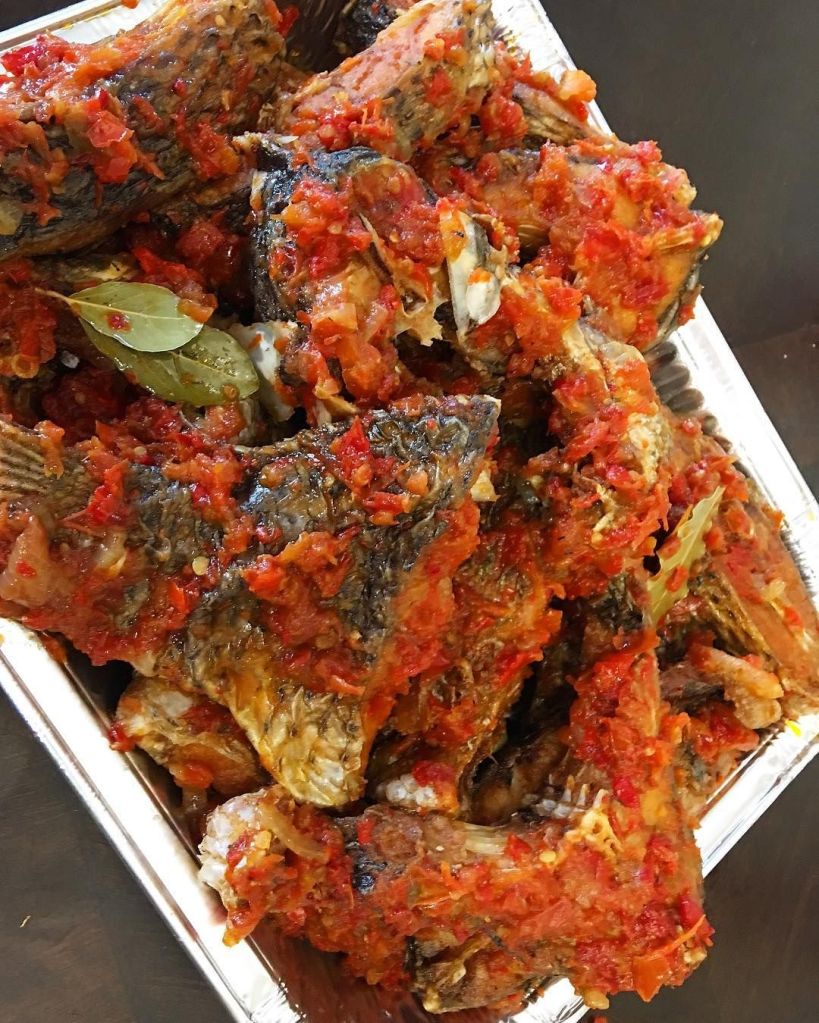
  • Seasoned fresh red snapper fish, peppered cray fish, deep-fried shrimp, large blue crabs cleaned & marinated, now in relationship with each other!
  • Aroma of sautéed and stir-fried peppered snail directing traffic and confusion between Campbell & Broad street!
  • Tilapia fish, so settled and humbled in their new abode; grated garlic and ginger sauce!
  • Assorted seasonings like cloves and fresh thyme hanging around like foreign neighbors!

Oh no! IT IS FREJON DAY!

With all that’s going on around the world, I absolutely, almost forgot all those fun years until a childhood friend and my next door neighbor then (now lives in The UK)  sent me a text reminding me of how my Mom would constantly send “Those Frejon Baskets” to their family every Good Friday, and how much they’d loved it!  #ThanksAngie

Oh wow! Brought back….Good Old Memories!

Even though it was a cultural recipe passed down from my Paternal-Grandmother (The Coker’s- The DaSilva’s -The Gansallo’s) to my Mother.

Our family Frejon was usually made in large bulk and distributed out as gifts to family & friends every Good Friday!

The packaging is usually more exciting for me! The selection of dishes to use, how well the bean puree is carefully poured inside the deep oriental dish, separating the dish for the fish stew, peppered fish or separate side dish for Garri (cassava flakes) to sprinkle or side dish of peppered snail garnished with bayleaf.

As a child then, I usually just looked forward to the token (money) I get from delivery the frejon! In fact, as I got older, I became wiser and selective on which family house to drop off the ‘Frejon basket, so my tip was  bigger! Lol!

So. . .

Nothing excites a child more than seeing family members travel from far and wide just to gather on the ‘Island’ with Uncle Kayode (My late Dad) to eat Frejon, experience the great Easter Brazilian Fanti carnival! …’every April!

Nothing beats the memories of how much emphasis my mom made on the importance and value of the measurement of the beans pudding, the clove, the texture of the coconut milk when mixed to smoothness while cooking it in the paste! The aroma of grated ginger, garlic and other spices over seafood splashing and dancing in a sizzling frenzy in a big frying pan!

Fast Forward. . . Today! My Kids, The Generation Z! They don’t really care about the sizzling ginger or garlic over sautéed fish! Or why I have to feed the nation with black beans cooked so-long when I can easily pick up black-eyed beans from Taco Bell! Phew! ‘They don’t get it, right?

Amid social distancing and all that’s going on, Good Friday, hmmm.

I shall be ordering Bob Evans ‘Fish & Chips’ to celebrate with my Family – I don’t think these kids care so much about the texture of sautéed ginger snails and frejon! Maybe my grandkids…

‘I hope my Mom and my late Grandmas will understand!

Yours in HOPE,

Yinka.
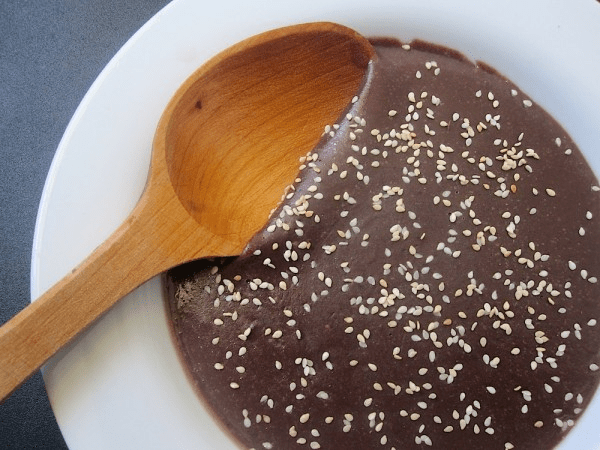
Frejon (From Feijão, which is the Portuguese word for beans) is a coconut milk and bean soup which is eaten especially during Holy Week by a selection of Christians, mostly Catholics, across the world. Countries where Frejon is popular include Brazil and Nigeria (especially among Yoruba who returned to Nigeria from Brazil at the abolition of the slave trade, and settled in what is known as the “Brazilian Quarters” in Lagos Island), and also Sierra Leone on Good Friday, or for functions such as weddings.[1] Because dairy foods and flesh meat (beef, pork, goat) are strictly forbidden on Good Friday, this dish is a suitable accompaniment to non-dairy foods such as fried fish and peppered snail.


The New York Times Cooking