
sometimes it is hard to see the picture
when you are the frame
How do you move away from something difficult, dangerous, or disagreeable?
Should we tell someone about our painful past? Are we still struggling with our childhood or adult-life experienced trauma but endangered to discussing our experiences?
Our unhealed childhood trauma can manifest in various ways, hereby impacting both our mental and physical health, as well as social interactions. When un-resolved, it can lead to emotional and mental health challenges, difficulty forming relationships, behavioral issues and moving on in life.
Adults who endured serious childhood trauma may assume their whole future must be determined by their past. It doesn’t have to be. Those who are able to choose a different path can beat the odds.
One rewarding part of my job as a therapist is persuading or encouraging people to go back memory lane… which is more like revealing ourselves to another person, but appropriately applying clinical tools like DBT and CBT-Informed Trauma for safe space purposes.
Believe me, this is not an easy task.
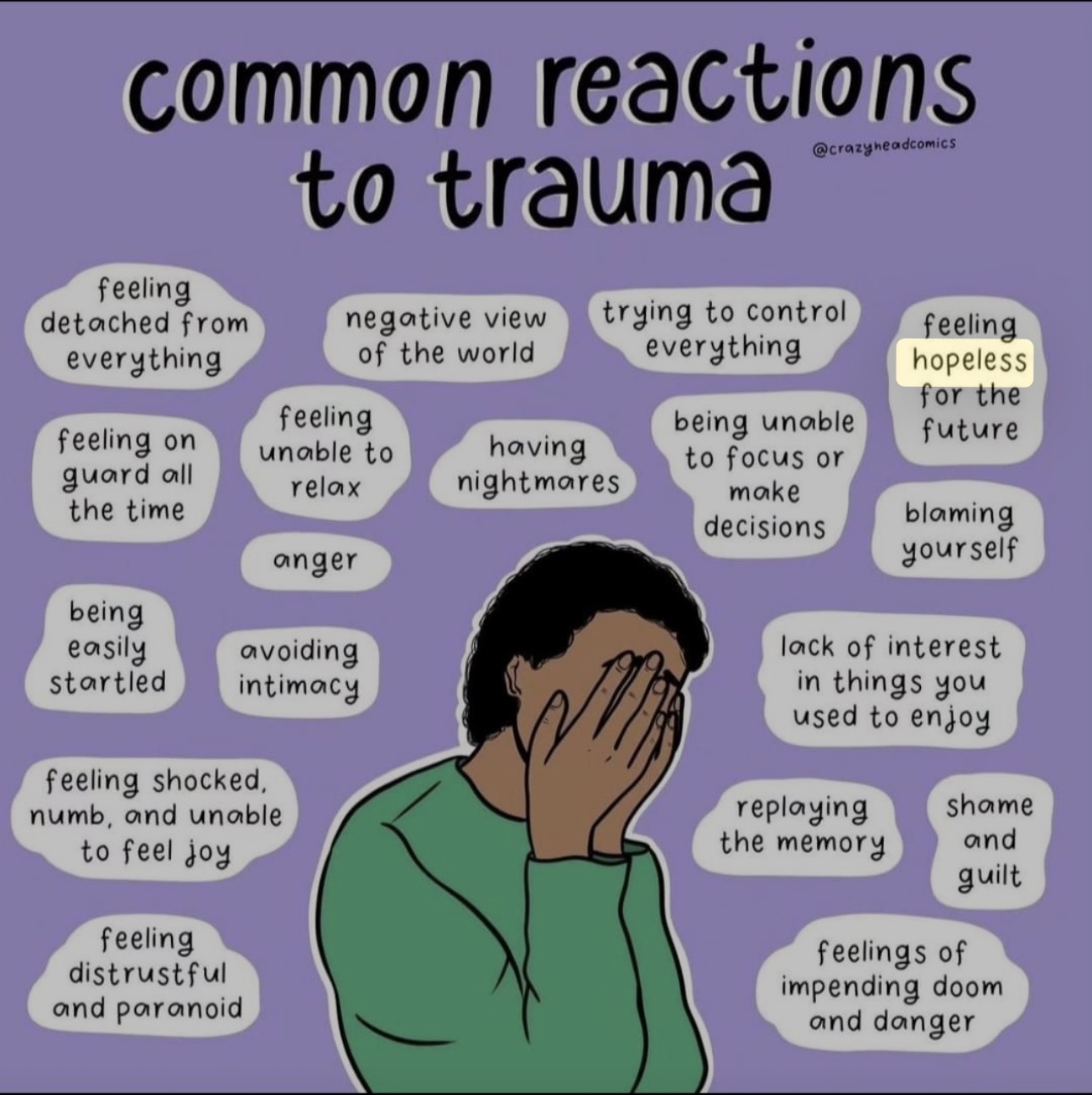
Many people I know have experienced at least one trauma event in their lifetime, with so many developing into PTSD (post-traumatic stress disorder) and still not comfortable talking about it. Even when we know that the power of self-disclosure will bring about change, growth, increase our comfort level when telling our stories, especially if we are still hurting whenever we think about it.
But while we were yet children, more than 20% of us will have at least one or two traumatic experiences. Some we have managed to resolve through divine or direct intervention, or probably still covering up our bruises from over the years until emotionally triggered or displaced.
So, what is trauma? Trauma is an emotional response to a terrible event like physical, sexual, emotional abuse; or an accident, crime, natural disaster, neglect, experiencing or witnessing violence, death of a loved one, war, and more.
In my opinion, trauma is defined by the way a person reacts to events. An adverse traumatic experience to one person may not be dreadful to another. While some people can cope with the trauma and move forward quickly. Others, though, may not be able to cope.

I have experienced some and still healing … I also have listened to several of my support group members tell me theirs.. “Hey, Its Okay, This Is a Safe Space To Be You” I usually say with a warm assuring smile before every therapeutic session as they tell their stories.
It takes so much courage to talk openly about experiences that are humiliating and invalidating. Some trauma survivors hold deeply entrenched feelings of self-blame and other distorted and inaccurate thoughts about the role they believe they played in their abuse. Some display laughter which is a way to communicate that embarrassment, and also an avenue for distraction to short-circuit further exploration of their trauma experiences.
What We See: Immediately after such an adverse event, shock and denial becomes typical, long term reactions include unpredictable emotions, flashbacks, strained relationships, and even physical symptoms like headaches or nausea. While these feelings are normal, some people will have difficulty moving on with their lives and become burdened with their untold tales of trauma. Not everyone though.

But, why then do we still struggle to share our painful experiences? I know talking about our painful past comes with risks and rewards, and I know there is no single rule or principle that all people who have experienced trauma can follow and expect positive results when it comes to self-disclosure. But the good thing is that, probably knowing how to break the code of silence may be easier if we know how self-disclosure helps.

After working with young children for years, I learned that some of their response to traumatic events usually appear in the form of anger or fear and can seem like a regular display of emotions that are sometimes not considered trauma, but disruptive behaviors in structured settings, especially at schools.
For the older generation, underneath all that exaggerated laughter, macho moves, makeup, fancy garment, social media packaging display… there is just so much more going on with a camouflage for suffering in silence. It is important to recognize these emotions and behaviors as possible trauma symptoms, without dismissing them as just being attention-seeking, fake-happy, sad or moody.

My personal trauma story is linked around my MAY birthday season, it has become a conscious mental health check clock that takes me back memory lane to my never-to-be forgotten 19th birthday celebration event which resulted in an overwhelming lockdown in Ogoni Land. A terrifying school riot in Rivers State.
I still cringe with daunting memories as layered goosebumps decorate my skin whenever I remember the faces of distressed students running around the campus, seeking shelter and escape… gun shoots, screams, burning buildings and finally safety in the hands of total strangers who sheltered us in an unknown remote village to hide for days, until help came from Port Harcourt city civil right advocates.
I never realized I was haunted about the whole event until I finally sat down for social emotional disturbance talk-therapy 15 years later to address a different emotional distress, after being robbed at a bank in downtown Philadelphia, while working as a head teller.
Oh dear! that was a-whole-lot of unresolved narratives poured out… but yeah, I was glad the platform was available, it helped me move forward… #TalkTherapyWorks.
What’s the impact of trauma?

So, today if you are reading this… Let’s practice some mindfulness together….’soft breathing techniques… in with the new…. out with the old... while applying deep self-reflection towards our feelings and asking ourselves… ‘What quirky memories do I still carry with me? ‘Do I still tremble or easily triggered when I remember any dreadful event? ‘Am I still holding on to some bizarre memories of what …’He did to me’.. ‘She said to me’.. ‘They put me through’? Has there been any remarkable behavior that struck you about people who had never disclosed their history of trauma that you can identify with?
Was there any enormous feeling of guilt, shame and negative self-concepts that stayed the course of time in your mind? Would you agree that some painful emotions were as fresh today as when they first arose? Most of us have not learned to shift those traumatic memories to be simply bad memories; memories that have little power to stir up distress.
What We Hear: I noticed a lot of people exposed to several adverse childhood experiences saying, “I have never talked about this before. No one will believe me. No one has ever asked me.” But evidently, our trauma stories do not reside inside us anymore; because we decided to tell it… to release, forgive, inspire and teach.
Some poor conditions in the past and present can affect us, but not disturb us. Overtime, we have allowed our present beliefs to create our current disturbance. We often underplay and do not recognize how flawed our logic is about our trauma events.
To challenge our reasoning, I usually practice the following: “Imagine you’re talking to a 12-year-old who just experienced their father walk out of the family and disappear forever. Would you suggest that if the child had only kept their grades up, cleaned their room more often, and been a better person, bad things would not have happened to them?” hmmm…certainly our thinking does not sound very helpful when we put it to that test. What about that child 20 years after? How is the family doing emotionally, 10 years after?

One of the hardest parts of therapy (talking) is revealing ourselves to another person. It is also one of the most healing paths into self-discovery when done in a SAFE space. We are hurt in the context of relationships, and it is within another relationships that we find healing.
We can still be struggling with disconnecting from the past, shut down any advances to move forward, and in the process, find our healing path in another worthy relationship that is so good for us.
As C.S. Lewis once said, “You can’t go back and change the beginning, but you can start where you are and change the ending.”
When we feel shameful of how self-disclosure can expose our fear, weakness and vulnerability, but also leads to post-traumatic growth, improve relationships, and facilitate lasting change.

What to do: You Are Not Alone. Help Is Here. Once you are ready to talk about your painful past, possibly for the first time, here are some things to consider in a SAFE SPACE.
- Encourage and bring others into your lonely and confusing personal story can help end that isolation. (Licensed mental health counselors, Psychologists etc.)
- Talking can help you change the narrative surrounding the traumatic event.
- Direct your ‘When thoughts’ …when heard silently in our minds, they seem convincing. But when we say our thoughts to others, we can see the flaws and faulty reasoning more easily.
- Change the narrative surrounding the traumatic event by practicing rational emotive behavior therapy (REBT) which helps to assert that our beliefs about ourselves, others, and the world keep us stuck, not the events themselves.
- Talking with others with the same lived experience might be a place to start (this is not pity-party) Regardless of your next step, know that you are not defined by your past but by the direction you are heading.

Today, I find myself constantly using affirmation words like… ‘Hey, It’s also within relationships that we find healing‘ Right? “It is okay to set boundaries and bury some” Or just assuring my support group that it is okay to SMILE or laugh when disclosing trauma of a diagnosis.
Our story telling laughter can mean many things to different people. It can signal shame, embarrassment or it can be a defense that protects the trauma survivor from feeling the depth of their actual pain. Have you identified yours?
Moving forward… as I celebrated another birthday last week, I’d decided not to take life too seriously anymore and begin practicing more self-reflection partnered with long adventure-vacation. Simply by having more fun on this journey called life, shuffling and intentionally selecting only what feeds my soul positively, without holding back but flushing out the past and all that came with it. You should try it too… Well, I am still standing, LOL…’ with two lessons learned for a new age (1) Self Reflection. (2) Rest. But more grateful to God.
It is MAY, National Mental Health Awareness Month. ‘How are you developing mentally?
Yours in HOPE as I share…
Yinka.
 Challenges undertaken for the greater good bind us to people, whereas the pursuit of comfort leads to isolation. And for certain, isolation is terminal. But, how do we recognize our weakness? And work on our strength? If we are not expressive!
 Moving Forward With Yinka